Building an online community is a lot like hosting a great party. You’re in charge of setting the tone, inviting the right crowd, and keeping the energy alive. Social media community management is your digital version of that—but with much higher stakes. Whether you’re a brand building a loyal following or a startup looking to generate buzz, managing a social media community effectively is critical.
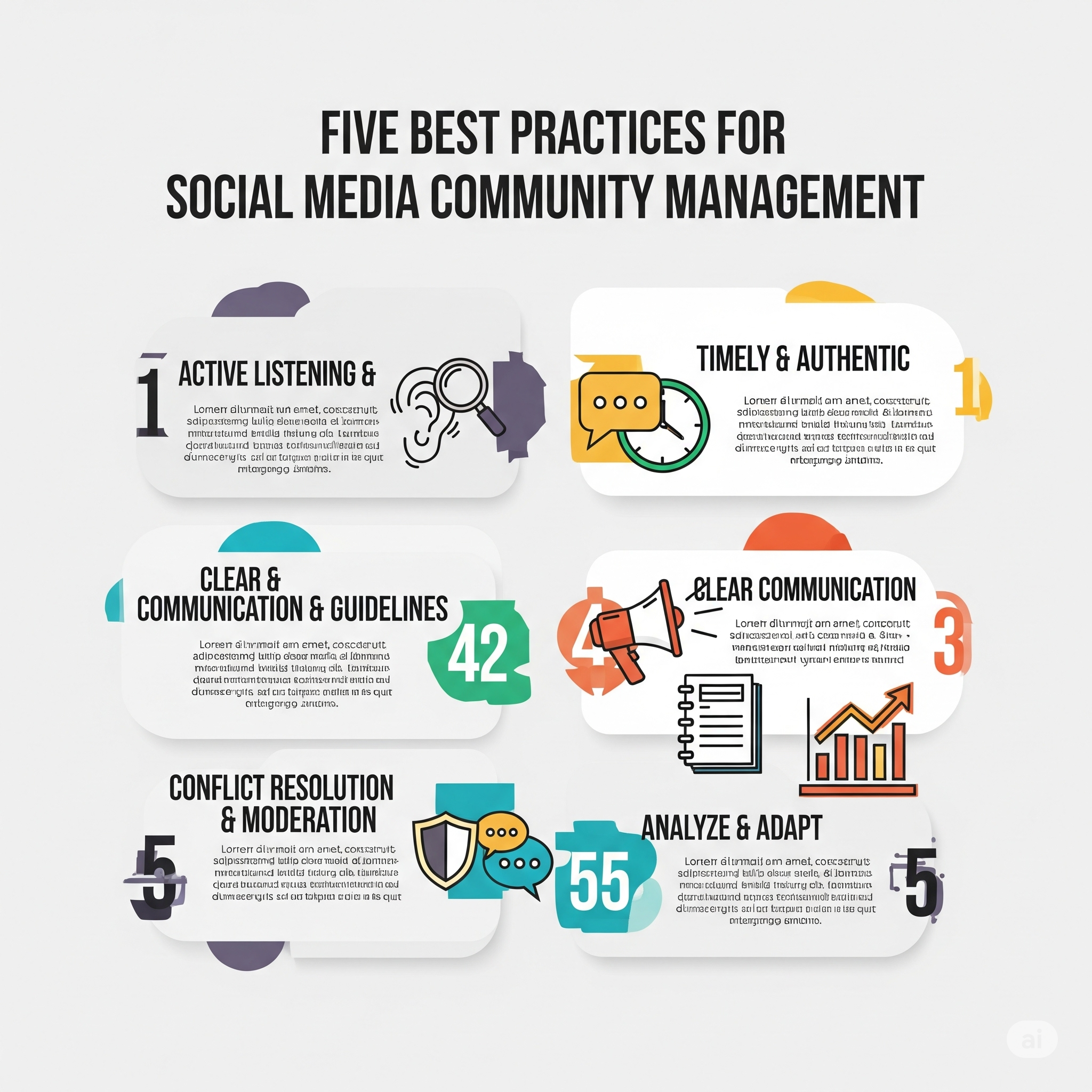
This guide dives into five best practices for successful social media community management. From setting up guidelines to analyzing your efforts, you’ll learn how to create a thriving, engaged online space.
What is Social Media Community Management and Why Does It Matter?
Social media community management means more than posting occasional updates on your platforms. It involves building, growing, and nurturing relationships with your audience. You’re not just promoting your brand; you’re fostering loyalty, conversation, and trust.
Think about this statistic for a moment. According to Sprout Social, 74% of consumers say they’ll buy from a brand that champions exceptional social engagement. That means your community can become your best marketing tool, provided it’s managed thoughtfully.
By following the five practices below, you’ll ensure your community stays active, respectful, and vibrant.
Setting Clear Community Guidelines
Why Community Guidelines Matter
Imagine walking into a new club. You’d want to know what’s acceptable, when the dancefloor opens, and whether there’s a dress code, right? That’s what community guidelines do for your audience. They define the rules of behavior, ensuring everyone knows what’s encouraged and what’s not tolerated.
Clear guidelines make social platforms positive and engaging while protecting users from toxicity or spam.
What to Include in Your Guidelines
Your online community guidelines can cover:
- Tone and language expectations.
- Rules around promoting businesses or external links.
- Policies on hate speech, harassment, and offensive posts.
- How complaints or disputes will be handled.
Example of Great Guidelines
Here’s an example from a thriving online brand:
“We encourage respectful exchanges and constructive feedback. Explicit content, hate speech, or self-promotion without approval will be removed. Repeated violations may result in a ban.”
These rules strike the perfect balance between welcoming and firm.
Engaging Actively with Your Community
The Importance of Active Engagement
One-way conversations don’t cut it anymore. People follow brands to feel seen and heard. Active engagement not only boosts your visibility but also strengthens your relationship with followers.
Plus, the more people engage with your page, the higher your social media algorithms will rank you.
Ways to Engage With Your Community
- Respond to Comments: Acknowledging shoutouts or answering questions goes further than you think.
- Host Q&A Sessions: Use Instagram Live or Facebook Stories to connect directly with your users.
- Run Polls or Games: Encourage your community to interact through fun challenges or surveys.
Real-Life Engagement Wins
Brands like Wendy’s excel at quirky, personalized responses to followers’ tweets. Their razor-sharp wit not only entertains but also creates memorable interactions.
Pro Tip: Adopt a tone that aligns with your brand. If humor isn’t your strong point, a heartfelt thank-you works just as well.
Listening and Responding to Feedback
Why Feedback Matters
Your community is an untapped goldmine of insights. Listening to their feedback allows you to improve not just your social presence, but also your products, services, or processes.
How to Gather Feedback
- Surveys: Simple tools like Google Forms can help collect opinions.
- Comments and Reviews: Take note of recurring themes in your feed and DMs.
- Social Media Monitoring: Tools like Hootsuite can track brand mentions so you stay in the loop.
Tips for Responding to Feedback
This part is crucial. Balance transparency with professionalism:
- Acknowledge issues calmly without defensiveness.
- Be proactive by outlining how the issue will be resolved.
- Follow up with updates. Show you’re accountable.
Example: A coffee brand faced backlash over a delayed order. Their prompt, empathetic response, paired with a discount coupon, turned an unhappy customer into a raving fan.
Creating Valuable and Engaging Content
Why Content Matters

Your content is what gets people through the door. Make it useful, make it stand out, and most importantly, make it human. From relatable memes to insightful tutorials, diverse content keeps your community coming back for more.
Types of Content Your Community Will Love
- Tutorials or How-Tos
- Behind-the-Scenes Content
- User-Generated Content (featuring your community members).
- Giveaways and Contests
Examples of Engaging Content
A beauty brand recently posted a “Show us your favorite lipstick moment” challenge. Not only did followers enthusiastically participate, but the entire campaign vastly expanded their reach.
If you’re unsure where to start, mix up your formats. Try IG Reels today, test carousel posts tomorrow.
Measuring and Analyzing Your Efforts
Why Measuring Matters
Investing time, energy, and resources into community management is only worth it if you evaluate its impact. Metrics tell you what’s working, what’s not, and what needs tweaking.
Metrics You Should Track
- Engagement Rates (likes, comments, story replies)
- Follower Growth Rate
- Sentiment Analysis (is the feedback positive or critical?)
- Response Time for Messages
Don’t just track numbers. Dig into the “why” behind any spikes or drops.
Tools to Simplify Tracking
- Google Analytics for traffic insights.
- Sprout Social for comprehensive analytics.
- Hootsuite for detailed social dashboards.
Integrating these tools streamlines your strategy and keeps you focused on key objectives.
People Also Ask
What does a social media community manager do?
A social media community manager oversees the daily interactions with followers, moderates content, and implements engagement strategies that nurture online relationships.
How do brands engage community online?
Brands engage followers by responding to comments, sharing user-generated content, running Q&As, and creating contests or polls that encourage participation.
Why are content guidelines crucial in community management?
Content guidelines create consistent boundaries that foster a respectful and spam-free environment, ensuring everyone has a positive experience.
How to efficiently monitor social media communities?
Leverage tools like Hootsuite or Buffer to track mentions, schedule posts, and analyze engagement metrics.
Do small businesses need community management?
Absolutely. A well-managed community can elevate even small businesses, helping them build loyalty and reach a wider audience organically.
Building a Thriving Online Community
Every thriving social media community starts with clear intentions, excellent communication, and consistent care. By following these five best practices, you’re setting yourself up to foster loyal brand advocates, drive engagement, and stay ahead of the competition.
Community management is the bridge between your brand and its people. Step onto it and watch your social presence transform—for the better.
Looking to level up your community engagement strategies? Subscribe to our newsletter to never miss expert tips and actionable insights.